
Home-Cooked vs Restaurant Food: The True Cost Breakdown
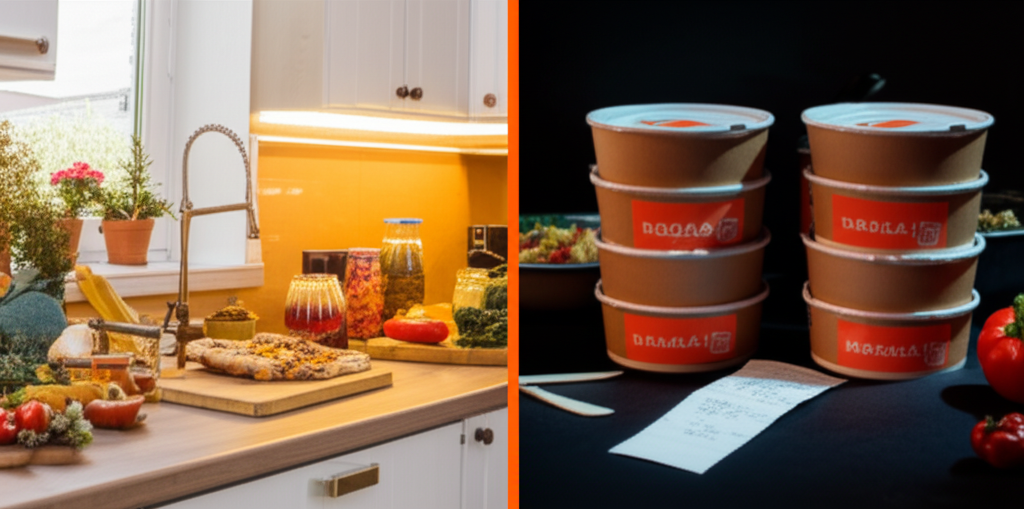
We all know home cooking is "cheaper" than eating out. But how much cheaper? And when you factor in time, convenience, and hidden costs, is it always the better choice? Let's break down the real numbers.
The Basic Math
Restaurant Meal (Dine-in)
- Entree: $15-25
- Drink: $3-5
- Tax: ~10%
- Tip: 18-20%
- Total per person: $25-40
- Entree: $15-25
- Delivery fee: $3-6
- Service fee: $2-4
- Tip: $3-5
- Total per person: $23-40
- Ingredients per serving: $3-8
- Utilities (minimal): $0.50
- Total per person: $3.50-8.50
- those simple calculations miss important factors.
- Planning: 10 minutes
- Shopping: 30 minutes (amortized)
- Prep and cooking: 30-60 minutes
- Cleanup: 15-20 minutes
- these add up over time.
- 50% more calories
- 2-3x more sodium
- More saturated fat and sugar
- Cost: $8-15 per serving (similar to home cooking)
- Time: 5-10 minutes for pickup (like takeout convenience)
- Quality: Home-cooked with real ingredients
- Health: Typically healthier than restaurant food
- home-cooked quality at home-cooked prices, without the time investment.
- You enjoy the process
- You have time to spare
- You're feeding a family (better economies of scale)
- You have specific dietary needs
- It's a special occasion
- You're socializing
- You truly have no time
- You want cuisine you can't make yourself
- You want home-cooked quality without cooking
- You're cooking for one or two (hard to do efficiently)
- You want to support your local community
- You're a cook wanting to offset costs
- Cook at home for dishes you enjoy making
- Eat out occasionally for social occasions and variety
- Use meal sharing to fill the gaps affordably
- it's to eat well without overspending. Understanding the true costs helps you make intentional choices rather than defaulting to expensive habits.
Takeout/Delivery
Home-Cooked Meal
The raw numbers are clear: home cooking costs 3-5x less than eating out.
The Hidden Costs of Home Cooking
But wait
Time Investment
The average home-cooked dinner takes:
Total: 1-2 hours per meal
If you value your time at $20/hour, that's $20-40 in "time cost."
Food Waste
The average household wastes 30-40% of the food they buy. That $100 grocery bill? $30-40 goes in the trash.
Equipment and Utilities
Pots, pans, appliances, electricity, gas
Learning Curve
Bad meals happen. Burned dinners, failed experiments, and recipes that don't work out.
The Hidden Costs of Eating Out
Restaurants have hidden costs too.
Health Costs
Restaurant meals average:
Long-term health impacts are hard to quantify but real.
Quality Uncertainty
You don't control ingredients, freshness, or preparation methods.
Portion Distortion
Oversized portions lead to overeating or waste.
The Real Comparison
When we factor everything in:
| Factor | Home Cooking | Restaurant/Takeout |
|--------|-------------|-------------------|
| Direct Cost | $3-8 | $23-40 |
| Time Cost | $20-40 | $0-5 |
| Food Waste | +30% | None |
| Health Value | Higher | Lower |
| Convenience | Lower | Higher |
True cost of home cooking: $8-15 per serving (including time and waste)
True cost of eating out: $23-40 per serving
Home cooking still wins, but the gap narrows when you count your time.
The Third Option: Neighbor-Cooked Meals
What if there was a middle ground? Meal-sharing platforms like SplitDinner offer exactly that:
It's the best of both worlds for buyers
For cooks, it's a way to offset your grocery costs by selling portions you'd otherwise eat as leftovers or waste.
When Each Option Makes Sense
Choose Home Cooking When:
Choose Restaurants When:
Choose Meal Sharing When:
The Smart Approach
Most people benefit from a mix:
The goal isn't to eliminate restaurants
Calculate Your Own Costs
Track your food spending for a month:
You might be surprised. Many people spend more on food waste than they realize, and more on delivery fees than on the food itself.
With that data, you can make informed decisions about where to shift your food budget for maximum value.